 |  |
|---|---|
 |  |
 |  |
 |  |
 |  |
 |  |
 |  |
 |  |
ŠKÔLKA BUDÚCNOSTI (angl.)
súťaž AH Award 2017
Idea for this projects comes from assumption, that future kindergarten is city kindergarten. Young people start their families in cities and one time they will need kindergartens to take care of their children. Since there is less and less space for cities to grow in width, process of verticalization and urban densification takes place.
Modern kindergartens tend to be large complexes for a lot of children. This project has a different approach and takes lack of space into account. I used capital city of Slovakia – Bratislava as a model situation.
In my opinion, smaller objects for fewer kids is a way to go. It is also advantageous from “green” perspective, since smaller objects are more energetically efficient.
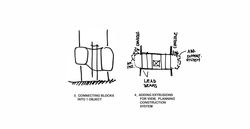
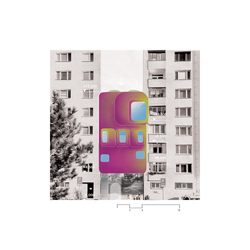
Kindergarten in my project makes use of existing buildings and facilities, so it saves up building material. It is “stuck” in a gap between two apartment buildings – a site plan, which we can find all over old housing developments and the whole object is lifted up, so the passage is not blocked.
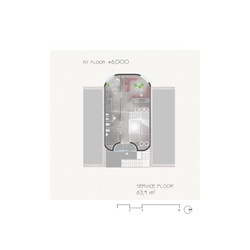
The object is made out of two blocks, which edges have been smoothed out – to signal this object is for kids, because, you know, kids and sharp edges do not go well together. These blocks are joined together by the core of the building. The elevator from the core connects the building with the ground. It is made from glass, so the building still looks like it is in the air. An additional staircase can also take you to the building, but as an addition, it is not supposed to look like it is a coherent part of the building.